Practical Archery Tips for Narrow One: Movement, Survival and Aiming
Let me be real with you—archery in Narrow One isn't like other shooters. There's no hitscan, no auto-aim, no forgiveness. Every arrow is a physics-based projectile with travel time and arc. After thousands of duels, I've learned that raw aim only gets you so far. What separates good archers from great ones is movement discipline, timing rhythm, and the ability to read your opponent's patterns. Here's what actually matters when you're trying to land consistent headshots and survive longer than 10 seconds.
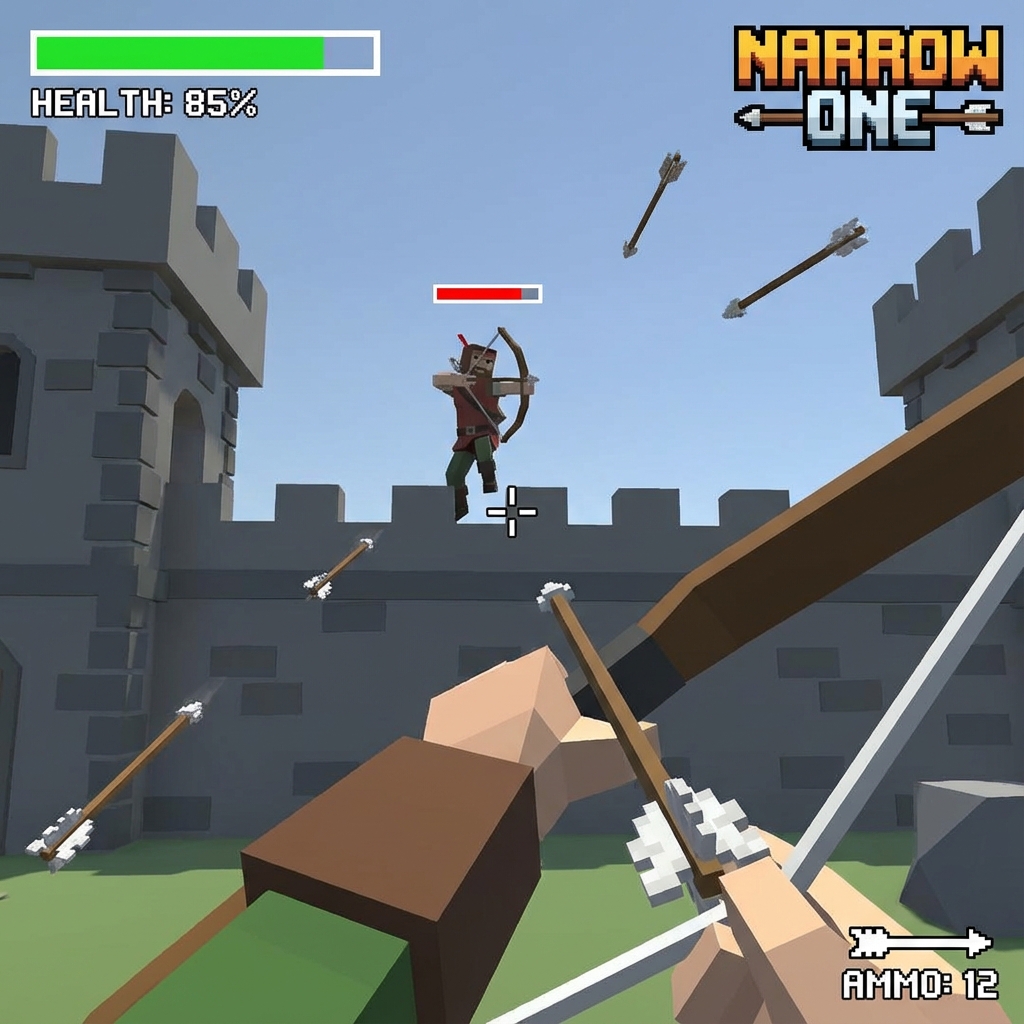
Movement & Survival
Movement is your first line of defense. Most new players either stand still like statues or spam WASD randomly. Both get you killed. What works? Short, deliberate strafe patterns—2 to 3 steps left or right, then pause. This desyncs enemy timing and makes you harder to predict. Mix in jump-peeks to change your rhythm. And here's the golden rule: never re-peek from the same angle twice. If you peek left side of a wall, next time peek right or don't peek at all. Predictable movement is a death sentence.
- Short strafe patterns: 2–3 step left/right with pauses to desync enemy timing. Don't just hold A or D.
- Jump-peek then stop: Change rhythm to avoid becoming predictable. Mix standing peeks with jump peeks.
- Cover discipline: Re-peek from new angles; never repeat the same exposure. They're pre-aiming where you were.
Aiming Rhythm Fundamentals
Forget flick shots for now. The best archers use a three-beat tempo that becomes muscle memory: pre-aim draw → short exposure → immediate release. You draw your bow behind cover (right-click), peek out for 0.4–0.6 seconds, release, then hide again. At long range, add slight elevation to compensate for arc—think aiming at their head to hit their chest. Against moving targets, lead by about half a body length depending on distance. It's not about perfect aim; it's about consistent rhythm. Once you nail the tempo, accuracy follows naturally.
High-Ground & Trajectory Advantage
High ground is broken in this game, and I mean that in the best way. It reduces effective range, flattens your arrow arc, and makes you harder to hit. Always contest high ground positions. Pro tip: shoot while stepping off edges for surprise timing—enemies don't expect the angle change. But don't hold your position too long; long holds reveal your location and make you an easy target. Peek, shoot, reposition. Rinse and repeat.
Team Communication
Good comms can carry mediocre aim, but bad comms will sink even the best shooters. Keep callouts concise and standardized: "Left lane 2," "Bridge 1," "High ground 1 rotating mid." Share enemy counts and positions, not your life story. The faster your team processes info, the faster you can rotate and trade kills. I've won games purely because my team communicated better than the enemy, even when we were getting outshot. Don't underestimate this.
| Context | Callout | Adjustment |
|---|---|---|
| CTF runner spotted | “Carrier right, 2 escort” | Body-block, clear choke |
| TDM mid pressure | “Mid 3, one left flank” | Group and trade |
| Control flip | “A stable, B weak” | Flex 2 to B |
Practice Drills
You can't improve without deliberate practice. Here are the drills I ran when I was grinding to get better:
- Rhythm drill: 60 seconds of pre-draw peek-and-release against static targets. Focus on tempo, not kills.
- Movement drill: Strafe–stop–jump–peek cycles around cover for 3 minutes. Build muscle memory for unpredictable movement.
- Audio drill: Play with headset and track footsteps to pre-aim likely angles. Train your ears as much as your eyes.
Run these daily for a week and you'll notice the difference. Your releases will feel smoother, your movement cleaner, and your awareness sharper. Trust the process.
Progress tracker
| Drill | Attempts | Success % |
|---|---|---|
| Rhythm | 20 | 70% |
| Movement | 15 | 65% |
| Audio | 10 | 80% |